
Without understanding the astonishing network of power exercised by the United Arab Emirates you would have no idea why the UAE was hit particularly hard by Iran in recent weeks. Nor would you know what fuels chaos from Libya to Sudan to Somalia to Yemen. If you understand the UAE’s business-geostrategic model and how it mobilises warlords, gold, oil, regional logistics and finance – you get much closer to seeing the pattern in the seeming madness.
Tiny UAE, 1.4 million citizens, wields so much power that Saudi Arabia sees it as a serious threat. In December, Saudi Arabia bombed UAE surrogates in Yemen and told the emirates to exit the country. They didn’t. If the US and Israel hadn’t attacked Iran, more fireworks were in the offing.
Israel is the UAE’s close ally. They collaborate not just on the War on Iran but in many of these various “civil wars” that are both money-making ventures and a series of heartless state-destruction campaigns that give them greater geopolitical weight in the region.
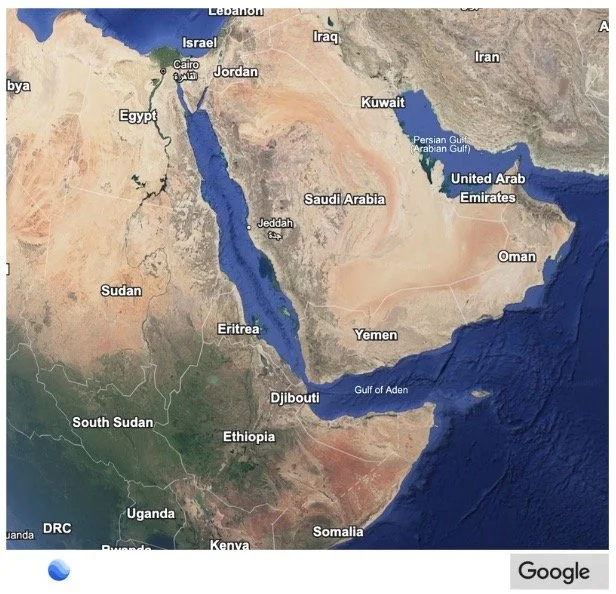
We first need to understand what UAE really is. Comprising seven emirates – Abu Dhabi, Dubai, Sharjah, Ajman, Umm Al-Quwain, Ras Al-Khaimah, and Fujairah – it is now the hub of an empire that both Iran and Saudi Arabia would like to knee-cap.
The powerhouse is actually Abu Dhabi, the oil giant which is the effective boss of the rest, including Dubai. Abu Dhabi is a family business, run by The Bani Fatima, the sons of Sheikha Fatima bint Mubarak Al Ketbi who is the most influential of the wives of the late Sheikh. Today, ultimate power resides with MBZ (Mohamed bin Zayed Al Nahyan) the eldest of her six sons.
The Bani Fatimid system works like this: identify a country that is experiencing instability, pick a side (preferably anti-political Islam) and offer not only to finance that militia or warlord of choice but provide the immense logistical support the UAE has, including air freighting weapons, supplies and soldiers, and the complex systems needed to convert, for example, stolen gold into arms or other assets. Time and again this has resulted in the creation of shadow economies that end up controlling significant resources (gold, oil, agriculture, ports) and creating parallel states. Libya, Somalia, Sudan and Yemen have all been played in this way. It is textbook divide and rule: weakening a state from within to then exert ongoing influence and resource extraction.
Dr Andreas Krieg of the School of Security Studies at King’s College London told The Thinking Muslim channel recently that UAE is far more advanced than Saudi Arabia in establishing powerful, agile networks across a wide zone of influence.
“It’s not about size. Size doesn’t matter in the networked global order that we’re operating in today. It’s about connectivity and who you can mobilize on your behalf – whether it’s in the information environment or armed non-state actors, such as the STC (in Yemen). But it’s also the commodity traders, the financiers, the banks, the insurance companies, the other trading corporations, that you can mobilize to generate what strategy is all about: influence and power,” Krieg says.
Libya’s terrible 15-year civil war has been immensely worsened by outside states, including UAE which turned general Khalifa Belqasim Haftar from a YouTube revolutionary into the head of the massively resourced LNA militia that now controls about a third of the country.
With UAE commanding the centre of a hub-and-spoke system, it can move fighters around the region at will, for example from Libya to Yemen where it sent thousands of LNA fighters to support local client militias. By backing the Southern Transition Council (STC) in Yemen, UAE got control over the vital Port of Aden. Similarly, by partnering with the Rapid Support Forces (RSF) in Sudan, tons of stolen gold flows into Dubai. You get the picture.
Gold is the prime currency of the Bani Fatima empire (MBZ and his brothers). Dubai is known in the region as The City of Gold, the place where the bulk of Africa’s yellow metal, much of it smuggled, finds its way.
Imagine this: at the very time tens of millions of Sudanese are suffering famine or near-famine conditions, the UAE is facilitating the export to Dubai of tons of gold to fuel the war. This represents billions of dollars that should be held for the benefit of the people but instead is being used for empire building.
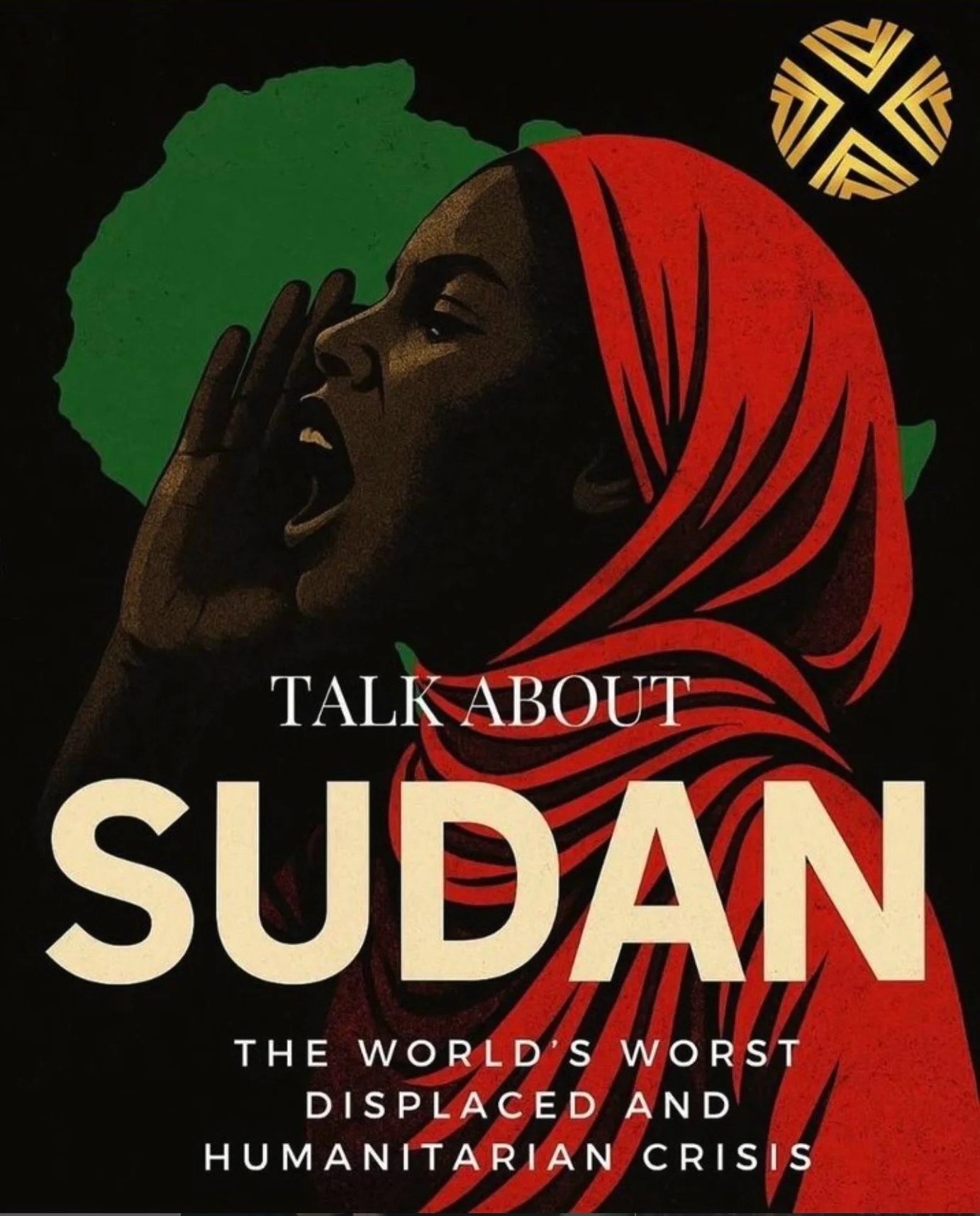
UAE “aid” changed the military balance and ensured the RSF took control of Sudan’s Darfur province, securing both gold and valuable farmland (once millions had been driven off their land). Starving, impoverished Sudan is now supplying tons of vegetables, oilseeds and grains to the tables of Dubai and Abu Dhabi.
Without the resources of the Bani Fatimid empire the terrible war in Sudan would likely have ended long ago. The Sudanese government has accused UAE of being a party to the genocide the country is suffering.
The Wall Street Journal, New York Times and the UN Panel of Experts on Sudan have all documented this but both the Biden and Trump administrations showed little interest in curtailing it.
John Menadue detailed Australia’s complicity in the UAE recently in Pearls and Irritations. My own country, New Zealand, whose ministry of foreign affairs, is fully aware of this depraved business, moved with speed last year to deepen its relationships with the UAE. As the RSF forces were closing in on the city of El Fasher, they were finalising a Comprehensive Economic Partnership Agreement – the fastest trade deal in New Zealand’s history. When El Fasher fell 60,000 Sudanese civilians were killed, and thousands of women were raped and trafficked by this tentacle of the Bani Fatima empire. Yet the UAE is our close friend and ally which, with the immense help of our media, is portrayed as some kind of noble victim.
In Somalia the UAE has switched sides when economic or strategic advantage could be made. Along with Israel, UAE is backing militias who have declared a break-away state “Somaliland” that borders the Red Sea and the Gulf of Aden. The UAE has military bases in “Somaliland” and has poured millions of dollars into the port of Berbera. With hundreds of kilometres of coastline adjacent to vital Red Sea shipping lanes, UAE and Israel will be important players in a contest with Yemen, Saudi Arabia and other powers.
In December last year Israel became the first to recognize Somaliland as a state. UAE is understood to be working on the Trump administration to do the same – further trashing the idea of territorial integrity for the sake of advantage. As an aside: Israel hopes to ethnically cleanse Palestinians to Somaliland one day.
All this dovetails with Israel’s strategy of smashing states to control them. For them, an alternative to regime change in Iran is Balkanisation to create several weak statelets thereby enhancing Israeli security and influence.
For those reasons and more, I hope the sovereign state of Iran survives the onslaught. I hope UAE and Israel’s genuinely evil business of fragmenting state after state is defeated. I hope the Western countries look at themselves in the mirror and ask themselves: what kind of moral monsters would be allies of Israel and the UAE?
Eugene Doyle 15 Apr 2026
Eugene Doyle is a writer based in Wellington, New Zealand. He has written extensively on the Middle East, as well as peace and security issues in the Asia Pacific region.
Somaliland has been self-governing and has had many elections since 1991 (former British Somaliland).
Turkey made a defence and economic agreement with Somalia in 2024 (failed state for decades), it is able to extract oil and gas from the nations land and sea.
https://www.bbc.com/news/articles/czrepkppnl1o
No one has destablised Yemen more than the Houthi
Some in South Yemen want self-government because with the Houthi as they are, Yemen is a failed state. Riyadh wants to maintain a recognised Yemen government it can ally to against the Houthi
Riyadh and Tehran working together on anything …
Wagner-Russia and Sudan's RSF were once partners in Libya vs a faction backed by Turkey.
(the former Sudan President had a financial arrangement with UAE to send in the group I call dirtweed – Janjaweed: Arab Baggara nomad militia active in the 2000s in Darfur; now called RSF – its leader should have been tried for crimes against humanity in Darfur back then – and once again this time around)
(the leader of the Sudan military was involved in Darfur crimes 20 or more years ago too)
Russia and Iran support the Sudan army in return for a promise of a Red Sea base.
Turkish made drones are given to the Sudan army by Egypt (who might well oppose a Russian base there).
UAE is supplying Chinese made drones to RSF transported through routes in eastern Chad, South Sudan, and Libya
https://www.criticalthreats.org/wp-content/uploads/An-Inventory-of-Foreign-Drones-in-Sudan%E2%80%99s-Civil-War-1.pdf
The Ethiopian government was supplied with drones by Turkey, China, Iran, and the United Arab Emirates (UAE) vs regional groups – maintaining a relationship with an existing government and making some money.
It is an unstable region and various national interests (both security and economic) are in play.
Thank you. Very informative.
I had wondered how the Sudan troubles tied in to all this.
UAE is also disrupting football via its proxy Manchester City. Saudi owned Newcastle will be taking notes ……thanks Boris.
115 charges laid against them over 3years ago that they've been waging lawfare against the EPL ever since and already won something around 3rd parties.
All details are confidential all that's known is they won with the costs spread out over all the EPL clubs of the ongoing legal bills battling those oilslick deep pockets.
Got their hooks into a certain north London club too, via the Emirates airline.
Thanks for this, Eugene. I'd never greatly cared for the UAE anyway; society, climate, culture …. you'd have had to pay me something into 8 figures to live there for any length of time. Now, though, it seems the place is far worse than merely unpalatable.
"As an aside: Israel hopes to ethnically cleanse Palestinians to Somaliland one day."
Does it? Your link just says some Somali official made that claim, which is worthless.
tldr; Left-wing ‘thinker’ discovers that foreign policy is driven by interests, networks, and hard power rather than moral bedtime stories; is somehow still shocked when states behave accordingly.
Of course the UAE is using its money, logistics, alliances, and proxies to secure its position and shape the region in its favour. That is not some profound unveiling of hidden evil. It is just power politics.
This comment is irrational, unnecessarily snarky, and bordering on disrespectful to the author; it’s not conducive to robust debate.
Power politics and evil are not mutually exclusive; any [degree of] overlap depends on the why and how of power politics. A quick reading of the OP mentions immoral actions of evil by individuals/families for purely selfish reasons & enrichment that go beyond amoral power politics.
The word “just” does an awful lot of heavy lifting here.
Good! It was supposed to be.
But my issue isn’t whether power politics can involve immoral or even evil actions. Of course it can. It’s presenting familiar patterns of state behaviour as though they’re some hidden revelation that only the author has been able to unravel, rather than the baseline operating logic of international politics.
States pursue influence through money, logistics, proxies, and alliances. Sometimes that produces outcomes we’d reasonably call immoral or worse. That doesn’t make it surprising or analytically profound.It makes it a clear example of how power operates when constraints are weak.
Calling it ‘evil’ might be morally satisfying, but it doesn’t add much explanatory value. It risks turning analysis into storytelling.
If the argument is that the UAE is particularly effective or aggressive in how it plays that game, that’s worth discussing. But that’s a different claim from treating this as some kind of shocking deviation from how states behave.
You continue to downplay this as ‘just’ state politics when the analysis in the OP makes it quite clear, at least to me, that it’s predominantly the actions of filial individuals who rule small emirates, which is not comparable let alone equivalent to some kind of generic state politics as you make it out to be, i.e., it’s false equivalence on your behalf. Of course, states use asymmetric power balance to protect & advance their interests, but when this goes beyond the usual (and generally acceptable) political and/or economical pressure (aka your ‘baseline operating logic of international politics’) and involves direct and/or indirect military action &violence, it ceases to be ‘just’ power politics and becomes immoral aggression and evil.
You paint the author as pretending to be some kind of shock-jock who moralises on his high horse and who claims to have ‘profound’ insights – you may not like his tone nor his message. This is such a deviation from what the author attempts in the OP and distorts the whole Post, IMO. In other words, you crafted a straw man that, in your eyes, justified the sneering and the TLDR warning at the beginning of your comment.
The irony is that I had no interest in reading Eugene’s Post until your comment piqued my interest, as a TS author myself. I still have little interest in joining the discussion on/of the topic content per se and I’m much more intrigued by how the debate develops here, i.e., a meta-analysis. I think this might help me understand why some people, myself included, sometimes talk past each other and the conversation becomes polarised and antagonistic. Ideally, I’d like to see the author defend his arguments, his narrative, and his conclusions under his own Post.
I think your meta-analysis point is actually quite interesting.
One of the dynamics at play here is that foreign policy positions, especially in a region as complex and historically loaded as the Middle East, have become a kind of shorthand for broader political worldviews.
So, in that sense, I’m not really just responding to Eugene’s specific claims about the UAE. I’m responding to the underlying philosophy of politics it reflects.
To me, that worldview tends to center moral clarity and condemnation in a way that can drift away from how power actually operates. The risk is that it leaves the left arguing from a position of moral purity, rather than building the kind of durable, pragmatic coalitions needed to win and exercise power.
That’s not a new tension. But it’s one that, historically, has often left the left out of government rather than in a position to shape outcomes.
On the substance: I’m not denying that what’s being described can be immoral, or even rightly described as aggression. My point is narrower than that. The mechanisms,whether exercised through formal state institutions or concentrated in ruling families, are still recognisably the same toolkit of power politics: money, networks, proxies, and, at times, force.
That’s why I’m not convinced it’s a false equivalence.
In many parts of the world, the distinction between “state” and “ruling individuals” is blurred to the point of being largely academic. Personalised rule doesn’t take it outside power politics; it’s one of its common forms.
As for the accusations of straw manning: I’m not trying to caricature the author or dismiss the argument out of hand. I’m pushing back on the framing. If the claim is that the UAE is unusually aggressive or unconstrained in how it operates, that’s a substantive argument worth engaging with.
More broadly, I’m coming at this from a fairly pragmatic left-wing perspective on foreign policy: one that tries to take power, incentives, and constraints seriously, rather than abstracting them away.
I’ve written a bit about what that could look like in a New Zealand context, but the same basic principles apply more generally. If there’s interest, I’m happy to sketch out what that kind of approach might look like in the Middle East as well.
Iran, Israel, the UAE et al. are each aiming to "shape the region in its [their] favour", and it's OK to publicise evils done in service to 'power politics' and 'region shaping'.
"It is just power politics" naturally suits proponents of 'might makes right' in Iran, Israel, the UAE and elsewhere – accounts / reports of evil in power politics not so much.
Once upon a time NZ might have been in the vanguard of an 'international law charge', and I hope that law survives – our overshoot civilisation needs it now more than ever.
The RSF and Sudan government have been partners for decades.
A few years back the former President of Sudan (authoritarian) was deposed by them and the Sudan military – they promised elections. Rather than hold them, they now fight for power.
None of this was caused by outside parties.
Is the post claiming that outside parties caused the Sudanese civil war? I read it more as claiming that the UAE and other outside parties are involved in ‘fueling‘ that war.
To be fair, while the UAE didn't start the civil war in Sudan, they absolutely have been funding and supporting various sides in it since Omar al-Bashir was deposed.
One side not both.
Neither the Sudan military boss or the RSF boss act for the recognised government of Sudan – there is none.
The two groups are led by men who worked together committing genocide in Darfur decades ago.
I don’t disagree that New Zealand’s foreign policy should start and end with support for a rules-based international order. Not just because it’s normatively desirable, but because it’s materially in our interests as a small state through reducing exposure to power imbalances and enabling stable trade.
Where I take issue is analysing other states purely through a moral lens. International Relations isn’t primarily a prescriptive discipline. It’s about understanding how states actually behave and why:interests, incentives, constraints, capabilities.
Moral judgement sits on top of that, but it can’t substitute for it.
You can absolutely document and condemn human rights abuses, proxy warfare, or destabilisation. But calling those actions ‘evil’ doesn’t explain them. It risks collapsing analysis into advocacy.
If we want to uphold international law, we first need to be clear-eyed about the environment it operates in. Which is a system where states routinely pursue advantage through whatever tools are available. Including coercion, proxy violence, intimidation, bribery, and military force
Describing that reality isn’t the same as endorsing it. It’s the only realistic starting point for building any system capable of constraining it.
Imho, looking at actions through a "moral lens" is OK – human even.
Amoral lenses are useful too – the devil is in the double vision.
The post uses 'evil' twice – some may prefer 'amoral' or 'immoral' as a substitution.
evilamoral / immoral genius of the UAEevilamoral / immoral business of fragmenting state after state is defeated.https://www.vocabulary.com/articles/commonly-confused-words/amoral-immoral/
I don't know enough about the Emiratis who are 'fueling' the Sudanese civil war to decide whether their actions are amoral or immoral, whereas the view of the post's author is unambiguous.
Res Publica # 7
Shrug.IMO you run a fineline sneer commentary on people who hold views you personally dont like. And esp IMO, Eugene Doyle.
Personally I recall a previous comment input on NZ's involvement in Korea, Vietnam, et al. IMO could be seen as bordering on jingoistic….
And your, also personal IMO, comments bordering on antipathy towards China. Whereby you state also to have apparent fluency in Mandarin. As if that gives you some revealed inner knowledge of the previously Inscrutable Mind? Please !
And your, IMO, previous sneer at NZ keffiyeh wearers. As if they personally offend you with their form/protest.
(these comments I definitely remember..but cant search)
So for you to be holding others to some nebulous moral judgement…I find interesting
Hi PSA
You’re right that I have a strong dislike of Eugene Doyle’s views, and you’re also right that I can be sharper in tone than necessary when engaging with him.
That’s a fair criticism, and I’m not going to pretend otherwise.
On the substance though, I think we’re talking past each other a bit. My point isn’t that morality is irrelevant, but that foreign policy decisions are ultimately shaped by power, incentives, and interests. Moral language is often part of how those decisions are justified, rather than the primary driver of them.
That doesn’t mean people can’t or shouldn’t argue from a moral position. It just means I’m sceptical of treating foreign policy as if it’s primarily a question of moral consistency, when in practice it rarely operates that way.
The following comment in 2017 by the UAE Foreign Minister on the matter of Islam in Europe gives some insight into how they're dealing with the rest of the Middle East.
Video clip embedded (only 30s and the YouTube video embed failed)
Transcript here:
There will come a day that we will see far more radical extremists and terrorists coming out of Europe because of a lack of decision making.
Trying to be politically correct or assuming that they know the Middle East and they know Islam and they know the others far better than we do.
And I’m sorry but that’s pure ignorance.
Some Moslem religious teachers have a greater freedom in Europe than in the ME.