
Open mike is your post.
For announcements, general discussion, whatever you choose.
The usual rules of good behaviour apply (see the Policy).
Step up to the mike …

Open mike is your post.
For announcements, general discussion, whatever you choose.
The usual rules of good behaviour apply (see the Policy).
Step up to the mike …
Comment numbers have changed to permanent references. Older quoted numbers may no longer identify the same comment.
https://www.rnz.co.nz/news/politics_election-2026/2010548/backroads-to-the-beehive-coal-politics-and-division-on-the-west-coast
An interesting read thoughts from several voters
The ODT is running a readers poll "Is the government tone-deaf on fast-track concerns?"
To date: Yes 96 No 4
The government will lose votes on this-people in the Whakatipu Basin are furious (as are people in other parts of NZ, especially fast-track approvals around Auckland). Queenstown and Wanaka had planning and zoning in place for residential housing until 2048. There was no need for any fast-track development.
Bishop and Luxon are lying when they say fast-track was needed for housing in the Queenstown Lakes District. It was an excuse to grant inappropriate subdivision consents for their mega-rich mates to become richer.
Imo TOP was always a stalking horse for the coalition. Way too easy a ride from the media was a bit suspicious as always follow the money.
Frank Mackasy's a sensible bloke who's opinions have been shared many times here on The Standard.
He's not fooled.
"The last barrier to a National-Act-NZ First-Opportunity coalition has been removed. Luxon may continue to protest any deal-making with OP, but that is now purely performative.
It’s game-on for a second-term Luxon-led government if voters cast their ballot for the Opportunity Party."
https://frankmacskasy.substack.com/p/opportunity-for-national
I expect a moderator will extinguish this comment, as it's a longish block of text from the sub stack of Daniel Pinchbeck, detailing his thoughts/findings around AI, imagination, mechanistic science and so on. In my opinion, it's on the button, but connecting with the ideas might require background reading and thinking, such as I have been doing. Anyway, because it's such a good piece, I'll give it a try and not be offended if it gets wiped 🙂
"
Lately, I’ve been fascinated by the French scholar Henry Corbin, who spent his life studying Persian Sufi and Shi’ite visionaries from the Middle Ages. Corbin explored what he called the imaginal, or the mundus imaginalis. He saw this as something utterly different from our idea of the “imaginary,” which we tend to dismiss as something unreal or made up. For Corbin, the mundus imaginalis exists as a third realm, mediating between the sensory and the intellectual worlds. He described it as a real domain with its own geography and its own beings.
We can investigate the mundus imaginalis through a particular faculty of perception: the active or creative imagination. Corbin described this as an organ of knowledge, an extrasensory capacity in a sense. In “Mundus Imaginalis, or the Imaginary and the Imaginal,” he envisions a world “ontologically as real as the world of the senses and that of the intellect,” but requiring “its own faculty of perception.” According to Corbin, Islamic mystics developed and refined their capacity to explore this thid world, charting what he called “the topography of visionary experiences.”
Europe possessed its own version of active imagination, but we lost our connection to it with the modern rise of mechanization and empiricism. Today, I am publishing a short excerpt from Marsilio Ficino’s Three Books on Life(1489), from my anthology, Secret Histories and Spiritual Traditions. It evokes this lost dimension — the imaginal faculty — from an Italian Renaissance perspective.
Ficino was a central figure of the Renaisance. He was a doctor to the Medicis who translated Plato and the Corpus Hermeticum, and founded the Florentine Academy. In his work, he tried to convey the art of attuning to the living cosmos. Ficino saw the world as “the greatest and best of all animals,” animated by a soul and permeated by a subtle, luminous spiritus mundi. He described techniques of working with color, scent, music, food, to enhance the quality of attention. The goal is bring yourself into harmonic resonance with particular celestial influences, which he defines: The Sun induces warmth and generosity, Jupiter offers prudence and expansiveness. Venus links us with love and beauty, while Saturn rules contemplation and melancholy.
For Ficino, astral magic does not involve binding demons or commanding spirits to act on our behalf. He talks about “becoming fit to receive,” removing “the obstructions of vice, disorder, and excess” so that “what is freely offered from above may freely enter.” Magic is, in other words, a practice of developing receptivity and sensitivity toward the cosmos. For Ficino, the universe was alive, synchronic, and connected with the human microcosm. We can engage consciously with the stars and the elements, receiving their subtle influences. As with the faculty of active imagination that Corbin explores, Ficino defines an approach to the world where perception becomes participation.
How and why did we lose all of this? Frances Yates’ The Rosicrucian Enlightenment (1972) tell part of a long story. In the early seventeenth century a Hermetic and Rosicrucian movement in Germany and Bohemia attempted to reform science, religion, and society, to restore connection to a living cosmology. They published anoynmous manifestos that were seen as a threat to Church and State. The Rosicrucian movement got crushed during the Thirty Years’ War, “by force and by savagely adverse propaganda.” What replaced it was the mechanical philosophy that developed from Newton and Descartes: “Mechanism divested of magic became the philosophy which was to oust Renaissance animism and to replace the ‘conjuror’ by the mechanical philosopher.”
Our scientific and technical worldview came out of the many centuries of repression of our innate visionary capacities (the Inquisition, for instance). We gained power over matter as a result. As we learned to quantify everything, we lost the ability to experience the world as a living presence. We forfeited the imaginal faculty that Ficino, Paracelsus, Böhme, and Hildegard of Bingen (among others) cultivated as something precious and invaluable.
By the way, if you want to experience a culture that still practices this metaphysical receptivity and resonance, please join me to visit the Kogi and Aruak people in Colombia in January. Email me if you want to learn more ( info@liminal.news).
A civilization that has declared the cosmos null and void — a “standing reserve” of resources — can rationalize cutting down forests, diverting rivers, and driving other species to extinction if they threaten to interrupt our “progress.” A culture that confuses imagination with fantasy can have its consciousness overwhelmed by advertising and algorithmic propaganda. Similar to Corbin, Rudolf Steiner defined the imagination as the first of the higher faculties of cognition (followed by intuition and inspiration), which we can develop through disciplined practice.
Right now, we witness the rapid evolution of synthetic intelligence, AI, subsuming many domains that, until now, we believed were solely reserved for human creativity, from chess to video editing to mathematics to most forms of intellectual labor. As ensouled beings, we also possess access to imaginal domains — to inner dimensions and felt presences that AI, as a mimetic engine, will never know. We need to cultivate our latent capacities for exploring these subtler layers of reality now, as AI emerges, like some mythological entity, from the rational unconscious."
https://danielpinchbeck.substack.com/p/how-we-should-prepare-ourselves-to
The philosphical history of "Go out and touch grass".
Given that or forests here are largely gone, replaced by pasture grass, that should be easy enough 🙂
For me, the key message from the piece is, "attend to the imaginal". We've "gone blind", mostly and can't see what's in front of our (inner) eye. Thanks for taking the time to read the article, tWig!
"…touch grass."
Yep as simple as that, so long as that is all that's happening.
No thoughts of needing to mow the grass, the grass is too cold, 'what am I cooking for tea tonight' etc.
Simply feel the grass on the feet.
You are the buddha, gsays 🙂
There's certainly a physical resemblance.
I'm working on a painting atm, "The navel of the universe" using the belly-button of the buddha as my model 🙂
It seems to me that the rich vein of art and literature in Western civilization, provides strong evidence that the "imaginal facility" is still a vital part of our society.
I see what you mean and it's a good point you make, only I wonder if "vital part" should be "minor part" given the very small number of people who create those works of art; consuming the wave of words and images that assails us daily is not the same thing as tending your imaginal capacities. Thanks for your comment, Belladonna, I hadn't expected any responses, tbh.
Does only creation count? It seems to me that the much larger numbers who view, read or listen are also exercising their imaginal facilities.
Perhaps they are gathering the material created by others, but yes, I believe that creation, or at least "seeing" unique and original "things" is what is meant by "imaginal". Whatever it is that (some/many but not all) artists are accessing from the "imaginal realm" is particular to them and never-before-seen. I suppose I'm referring to a certain genre of art oral least a certain "layer" of any art; there are artists who paint portraits and there are artists who paint portraits! I'm thinking too of all of the arts across the spectrum, but especially those that can be seen.
But the emotional world invoked when I listen to music is unique to me. The person sitting next to me at the concert may be (and probably is) experiencing an entirely different imaginal world.
The same is true with literature – especially poetry – the reader brings their own experience to create a shared imaginal world.
Those of us who lack the creative spark (or at have a lower creative capacity) – still participate in the imaginal would inspired by the artistic creative amongst up.
Ah! Yes, I too want to believe that the person next to me is experiencing an entirely different imaginal world, and to a degree, they are, BUT…
the commodified, homogenised aspect of modern, civilised, industrialised, capitalist life seems to be – draw it all in, make the experience the SAME for people – don't promote individualisation 🙂
I search for originality and uniqueness in every interaction. To me, it's a sign of life.
Sorry, I profoundly disagree with you. The arts are all about unique, unrepeatable experiences – even in a capitalist society.
You may be right about the homogenized furniture from IKEA, rather than individually handcrafted pieces. But you are not (or, at least, I don't think you are) right about music, literature and art.
It is one of the joys of the 21st century, IMO, that there are so many avenues for someone to self-publish their work. Creatives have greater facility and freedom to reach audiences than any time in history.
And they are less constrained by the 'system' than any time in history, either. The days when a publishing house or record label imposed 'standards' and acted as gatekeepers – barring access to the new and different – have largely gone. Yes, of course, there is rubbish (in my biased opinion) released, as well as the innovative, exciting and inspiring. But that has always been the case – even Homer nods.
And what is rubbish to me, may be an awe-inspiring numinous experience, for you.
Love your response, Belladonna. Certainly, there is an avalanche of self-published writing these days, and while much of it is likely pabulum, people are much more able to get it out there, into the public domain.
What I'm trying to understand is where does the dough for those literary loaves come from? Is it just recycled crumb from the loaves of others, or does it spring from the Great Starter of the Universal Mind – that is, is it truly original or is it derivative churn, nicely packaged and promoted?
I'm thinking about genius, what that is and who has it these days. AI challenges us to dive deeper, I believe, as it's excellent at assuming the Coat of Cleverness but true genius comes, I believe, from an organic source, perhaps even deeper, the soul, which I'm holding, AI does not possess. I worry that Modern Life, tainted as it now is with automated thoughts and non-human "passages of text" : advertising, pulp fiction, bot-written commentary etc isn't providing what was available in the past: Picasso, Klee, Joyce, Stein and so on. Is it too late? Are we awash with influences that prevent real genius in the arts?
My thinking is subterranean; I believe the spark of true creativity lies in the sub/unconscious of each of us but I fear few are looking their with any sort of confidence.
Interpretation of a work of art may also be creative: two people viewing a work may find different meanings in it.
May? Will. Should…
Probably. I first encountered something like this in the Preface to the 1805 version of Wordsworth's 'The Prelude'. In effect, it prefigures Marx's idea of alienation while expressing the desire to escape from it through the faculty of the imagination. And the whole Wordsworth/Coleridge programme incessantly distinguishes between imagination and 'fancy' (fantasy).
Good read thanks.
"He talks about “becoming fit to receive,” removing “the obstructions of vice, disorder, and excess” so that “what is freely offered from above may freely enter.” "
A lot of what is described here is stillness of mind, presence, attention, love or Godliness.
Freedom from the ego, the entanglements of the past and the future, a grounding in now.
High level sports folk talk of being in the zone, songwriters talk of the music coming through them.
It is incredible what comes to mind when we can be rid of our idea of ourselves. Often we don't like it but ignore it at your peril.
Lovely comment, gsays.
However … you say,
"It is incredible what comes to mind…"
I would, if I may, rephrase that as:
"It is amazing and it is credible what comes to mind".
I thrill to Moses and the burning bush.
He was receiving because he was open 🙂
Watching the coverage of the destruction caused by the riots in France. Where legitimate protest has been hijacked by violent anarchist elements.
Even though France has a long history of violent demonstrations – this seems to stand out as next level.
Commentators are calling it far left violence against the state.
https://www.france24.com/en/france/20261018-like-we-had-a-war-france-left-reeling-after-nationwide-violent-protests
I see this as likely to bolster support for the Far Right Le Pen. I don't think that she has the answers to the systemic problems that France faces – but but she is presenting as the only voice willing to stand against the violence that people are seeing on the streets.
I wouldn't be surprised to see a far right government/president in France in 2027.
More likely to be rightist thugs than left committing the worst violence given the earliest ones that attacked police wore fascist all black, like the rw anti-migrant thugs in the UK. Schoolkids and teachers are also unlikely to set fire to townhalls in order to increase staffing levels. The Gilets-Jaunes have joined the protests, too, among others. As for Pen, the phrase 'false flag operation' springs to mind.
Yes, I said that the protests were hijacked.
All of the commentators are calling it or reporting it, as far left. Even Al Jazeera, who I would expect to call it far right, if there was the slightest evidence.
https://www.aljazeera.com/amp/news/2026/10/18/paris-left-reeling-as-student-led-protests-turn-chaotic
I really don't think that the far right nationalists in Britain have a monopoly on black. 🙂
However, even if you are correct (despite complete lack of evidence), and it is a false-flag operation from the far-right – they have succeeded. The result is likely to drive moderates to the far-right for solutions.
I was just reading this report (below) on Al Jazeera,
You really didn't read the article correctly, BD. Nowhere is a political bent assigned to the behaviour, except for one quote saying 'far-left' from a think tank representative at the end. I looked it up: it is a US-based think tank who provides geopolitical advice to industry. Why on earth pop that in?
Once again, a huge largely peaceful protest of students, teachers and unions (CGT) , covered by one sentence in the article, looks only at the violent fringe.
France has a long history of legitimate street protest, and a side-order of physical damage can go with that. Its riot police arm has a history of disproportionate response, rw bias, using riot weapons illegally to cause people deliberate harm, and corruption (watch Case 137).
Have a read of recent posts at https://bsky.app/profile/stephlamy.bsky.social, who comments in both French and English, to get a rounder idea of the protests and backstory. Here's Lamy describing the huge protest in Toulouse she was at, and riot police response.
” is that riot police in France have (progressively) become exactly that. They are used by authorities to CREATE riots. To generate chaos. Macron's government does not want the information space saturated with images of massive protests that go well."
They can either address the problems the largely peaceful protestors have or they can point to the violence and destruction and use that as an excuse to smash them all into obedience.
The elite and their pawns tend to opt for the latter
I really don't think that Macron wants information space saturated with riots, either.
From the linked article
I hardly think that the French prime minister is a representative of a far-right think tank!
The fact that Al Jazeera – which has an undeniable anti-capitalist viewpoint is unable to find any trace of a link to hard-right – says a lot.
Al Jazeera 'leans left'. Imho, your "undeniable anti-capitalist viewpoint" is a mischaracterisation – could be a viewpoint thing.
Many people are finding the cost-of-living crisis difficult to cope with, and our sorted political leaders have little regard for and/or understanding of how ecological overshoot and high levels of wealth inequality will 'play' out. In their ossified minds, the only way forward is to provide ever more investment opportunities for private capital to grow Grow GROW
So what 'perspective' do you have about Al Jazeera?
B, make your case that Al Jazeera "has an undeniable anti-capitalist viewpoint" – that's some undeclared bias on open display, imho, unless you’re using "anti-capitaliost viewpoint" as a proxy?
That Al Jazeera 'leans left'; whether that equates to "an undeniable anti-capitaliost viewpoint" depends on your 'perspective'.
http://www.allsides.com/news-source/al-jazeera-media-bias
https://mediabiasfactcheck.com/al-jazeera/
https://studies.aljazeera.net/en/analyses/al-jazeera-english-us-media-landscape
I think that characterizing AlJazeera as 'left' casts a Western perspective, that is factually incorrect.
AJ offers a Muslim perspective – neither left nor right. Its coverage often (though not always) intersects with Western left-wing coverage. Especially over issues like immigration and racism.
But AJ is centrally critical of the capitalist West (rather than either the western political right or left wings).
In addition, AJ is very largely funded by Qatar (i.e. the royal family), and is frequently seen by other Arab countries as being a soft-power channel for the government. Hardly a left-wing position.
This article is a little dated, but covers the issues well.
https://annenberg.usc.edu/news/expert-view/why-some-arab-countries-want-shutter-al-jazeera
Thanks B, but tbh that hasn't helped me to make sense of your opinion that Al Jazeera "has an undeniable anti-capitalist viewpoint", and that article doesn't mention capitalism. Any examples of AJ's "undeniably anti-capitalist viewpoint"?
Are you sure that phrase reflects your 'perspective', or might 'anti-capitalist' be a proxy for something else?
I have literally no idea what you're getting at here.
But it seems to have nothing to do with my post on the riots in France.
I've clearly run out of space to respond to you, so will stop doing so.
Although I note that running out of space didn’t stop you from responding to me
You opined that Al Jazeera "has an undeniable anti-capitalist viewpoint". [@5.1.1.2.2]
I replied that Al Jazeera 'leans left', and that imho, your opinion was a "mischaracterisation" [of Al Jazeera.]
You then asked me: "So what 'perspective' do you have about Al Jazeera?" [@5.1.1.2.2.1.1]
I replied that Al Jazeera 'leans left', and provided some (additional) links to support my 'perspective'.
Your reply @5.1.1.2.2.1.1.1.1 contained no support for your opinion that Al Jazeera "has an undeniable anti-capitalist viewpoint".
I said as much in my reply, and asked for examples of Al Jazeera's "undeniable anti-capitalist viewpoint".
Since you've offered no evidence or examples to support your opinion, I've concluded that either 'anti-capitalist' is standing in for something else, or this particular 'perspective' of yours is is a triumph of your perception/bias over reality.
I'd honestly be happy to revise my conclusion if you provide evidence to support your opinion that Al Jazeera "has an undeniable anti-capitalist viewpoint" – we all make mistakes.
Seems like France has Macron in the centre, Le Pen on the right and an alliance on the left, with LFI, La France Insoumise, as a significant part. The 2022 presidential first round vote was split 28:23:22 between Macron, Le Pen and Mélenchon of the LFI, wiki
'According to political scientist Rémi Lefebvre, the programme of La France Insoumise is part of a socialism that is "very interventionist, very reformist, that believes in the essential role of public services, in ecological planning, in redistribution", and what it questions is "more ultraliberalism than capitalism itself" '.
'The party has been described as left-wing, as well as far-left. Far-left is a label used by its critics, including French President Emmanuel Macron, to compare it with the far-right National Rally (RN), but political scientists prefer the label "radical left". For the 2026 municipal elections, the Ministry of the Interior classified LFI as "far-left",
a decision the Conseil d'État upheld.'
They don't sound all that far-left to me. Climate action anti-neolibs, pro Public Service, who want wealth inequality addressed.
It's the LFI, along with public service union and teacher unions, who organised almost 300 peaceful protests with half a million people across France on Oct 17, a day on which, in 1961, hundreds of Parisian Algerians were murdered by the Paris police and tossed in the Seine when they demonstrated.
As Lamy writes, most of the demonstrators on Saturday were young people, and there is a hope this round of protests will incentivise this generation to become more politically active, and to act as a counter to the far right.
Lecornu was the centre-right, pro arms to Israel Prime Minister who resigned in early October, only 2 weeks after forming a government. Seems like it's all a bit unstable at the top of French government. I can see why the demos have become useful Laura'nOrder fodder while potential new governments jockey for position.
The French media framing, like the UK press, is criticised by the left for bias in its reporting. I can see why, when the large peaceful protests are barely mentioned, while a small number of extreme events on the fringes, which seem to mostly occurred after the marches, are presented as the far-left gone mad.
I found the riots puzzling, and find the destruction of history (buildings) appalling. Most of the narratives I were seeing online were high school students upset over teacher shortages and overcrowded classrooms (30 people), which made the riots seem an overreaction.
Then I read about having to be in overcrowded classrooms in 40 degree heat. That's not just very bad for learning, it's puts climate collapse in the faces of the people in France most likely to be worst affected. Damn right they should be rioting, about time.
I have no idea if this is a conscious goal, but it's hard to see given the country and history how it's not a driving factor. MSM and SM will drive another narrative (cue SM narratives about evil immigrants), because everyone is in denial.
There are other ways of course, but the power is mostly in the hands of people who aren't at high school and who will probably be dead before climate collapse peaks.
The XR people warned that if societies didn't take climate action seriously, people would eventually resort to violence. XR was committed to disruptive non-violence to wake people up to take action, but not everyone is going to take that position and the longer the powers resist action, the more likely people are to turn to violence.
I think that the initial protests were entirely justifiable – especially given the French tradition. 🙂
But it appears that these have been hijacked by people with their own anti-state agenda – hence the burning and defacing of historic buildings.
This is not going to end well.
sure, there are going to be thugs who take advantage, but the nature of rioting is that anyone who feels a grievance can get involved.
The left can be violent too, as can the general public. This is what the polycrisis looks like. The start of it anyway.
"Most of the narratives I were seeing online were high school students upset over teacher shortages and overcrowded classrooms (30 people), which made the riots seem an overreaction.
Then I read about having to be in overcrowded classrooms in 40 degree heat."
Yours is a critical observation, weka.
I was a teacher. 30 students in a confined space – not ideal. 30 students in a space heated to 40 degrees? Chaos – all bets off. Well done you for spotting this.
There is a significant difference between the protests (which were largely students, and then the gilets jaune – as the protest moved into a wider cost-of-living protest) – and the violent segue into burning buildings, etc.
The two groups would seem to be largely or entirely different. No one thinks it's schoolkids who are torching the historic town hall in Limoges
No one could reasonably think that, but some will try to promote that idea…
There has been huge amount of MSM discussion (much of it drivel) about a likely National Party overhang at the election. This will happen if National wins more constituency elections than the seats allocated to National through its party vote.
Below is a list that shows the National majority over Labour at the 2023 election. They represent constituencies Labour is likely to take off National according to the latest polls.
Banks Peninsula 396
East Coast 3199
Hutt South 1322
Maungakiekie 4617
Mt Roskill 1564
New Lynn 1013
Wairarapa 2816
West Coast/Tas 1017
There are also a swathe of seats where Labour is fairly close to National some of which may well be won by Labour this time. (Standard readers will be able to help with how likely this is.)
Hamilton East 5060
Hamilton West 6488
Northland 6087
Whanganui 5512
New Plymouth 6991
Then there are seats like Waitaki, where a strong Labour candidate could come through the middle because the right-wing vote is split between National and NZF. Or NZF could win it and reduce National's number of electorates.
National currently has 44 electorate seats. According to current polling it is likely to win roughly 35 seats on its party vote (28/97×120=35 with 3% assumed as wasted vote). It would have to lose 9 electorates for there not to be an overhang (44-9=35).
My guess is National will lose at least 10 electorates to Labour from the list above. There will be no overhang.
I haven't done a lot of analysis of individual electorates-happy to be corrected if there are local issues that affect the results of the electorates I have listed. There may well be boundary changes that affect the above electorates. Greens should tactically vote for the Labour candidate in the electorates above to prevent an overhang.
right. But isn't it that Nat's party vote has also dropped dramatically?
Yes you are right Weka. That is why I have used a party vote of 28% in my post* (reflecting current opinion polls). National got 38% at the 2023 election.
*that is the 28 in the 28/97×120=35 seats
I'm surprised at the lack of reliable, publicly released polls in these flippable electorates. With the "overhang" talk from Brash and others I would have thought this would have been very much in the public interest and media to be all over it. National will be polling in the electorates, they have the resources, and will have a very good idea of what's going on. For some reason they aren't saying much.
You could probably include Southland in your list, Mooney isn't liked much in Whakatipu, (never really been the case) and Jason Herrick (NZF) will be causing him some grief down south. Could create space for Peter McDonald, the Dipton sheep farmer Labour candidate to slip through, or maybe Herrick.
Then there's the delightful gems that are going to fall out of the woodwork about the past deeds and character of some Nat electorate MPs as senior Nat list MPs realise they are out of a job on Nov 8. There's bound to be some.
Mooney won Southland by 17,000. Hardly vulnerable. NZF didn't poll well there. They could put a drovers dog as candidate and still win.
I’d be very surprised if Mooney got a 17,000 majority this time. in Whakatipu it look’s like a 3 way contest and Mooney’s not in it. But we’re only 25% of the electorate. Down south it may be another 3 way contest with Mooney in front, but there’s two other candidates with strong Southland farming credentials. All Mooney’s got is the blue swandri.
Peter Mcdonald comes across as an excellent candidate.
Yeah, a sheep farmer from Dipton standing for Labour. Also got a very good understanding of how Whakatipu works. He's head and shoulders above everything we've had since Bill English. There's quite a bit of local government experience in there as well. The Labour Party has done well to secure that candidate, hopefully he becomes an entrenched Labour candidate, the electorate is hampered by a new candidate every election and candidates that can only identify with small parts of the electorate. Southland is one of the growth factories of the New Zealand economy, but with two very diverse sides, it needs strong representation from across the political spectrum.
Herrick's a dim-bulb.
Mooney" isn't much liked"?
He's being dismissed as a fool.
"Peter McDonald, the Dipton sheep farmer Labour candidate" is also an experienced local body-politician thanks to his tenure on the Southland Regional Council.
Take a look – please take a look, at the last few National Party candidates/MPs for this area – scandal alert!!!
We're much to polite here, surprisingly Mooney's signs are remaining remarkably intact, or his sign crew is up bloody early…
Scandal… Mooney…. waiting…. 3 weeks to go….
Peter McDonald is an absolute cracker!
He has given his all to this contest.
Makes Mooney look like … a National Party candidate.
Totally agree on Peter, authentic candidates /representatives like him are very few, from anywhere in the political spectrum. I hope he makes a career of it at parliamentary level. Would be nice to see him in 2019 well up the Labour list, or, going for th moon here, as incumbent MP for Southland.
Yeah, rather unlikely, but things happen
Thanks Bearded… Mickey Savage is a bit more confident than you on 14!! seats swinging from National to Labour= Banks Peninsula, East Cape, Hamilton East, Hamilton West, Hutt South (later Chris Bishop), Kapiti, Maungakiekie, Mt Roskill, Northcote, Wairarapa, Waitakere, West Coast Tasman, Whanganui and Whangarei. And a few are saying MAx harris at Tamaki could do the unthinkable and flip it… I also wonder if there's a Taine Randall effect of some sort in Magpie land
Hi Binders….as you know I wasn't claiming my analysis was definitive…….Mickey is hopefully (and probably) right with his prediction…I was being a bit conservative and just arguing that there would be no overhang.
It gets up my nose that so much rubbish has been talked in the MSM about this, and also in The Daily Blog.
'Fixing' Democracy.
Building Voter Suppression.
https://thestandard.nz/this-trick-of-national-could-win-them-the-2026-election/
Easy Lier & CEO Luxon – "So, yanno, but it's up to Kiwis, I mean, ah democracy's a really important thing, it's a precious thing – um – and what you gotta do is go out and get enrolled, and we made it as easy as possible and so – um – it's not difficult to do – um…" [RNZ, 19 Oct 2026]
'Ngati Goldsmith' gave fictional justifications for voter suppression – NZ attorney general Judith Collins put her finger on the real reasons.
And, if you aren't enrolled to vote by the 25 of October deadline, Atlas-ACT Seymour reckons you're a Kiwi 'dropkick'.
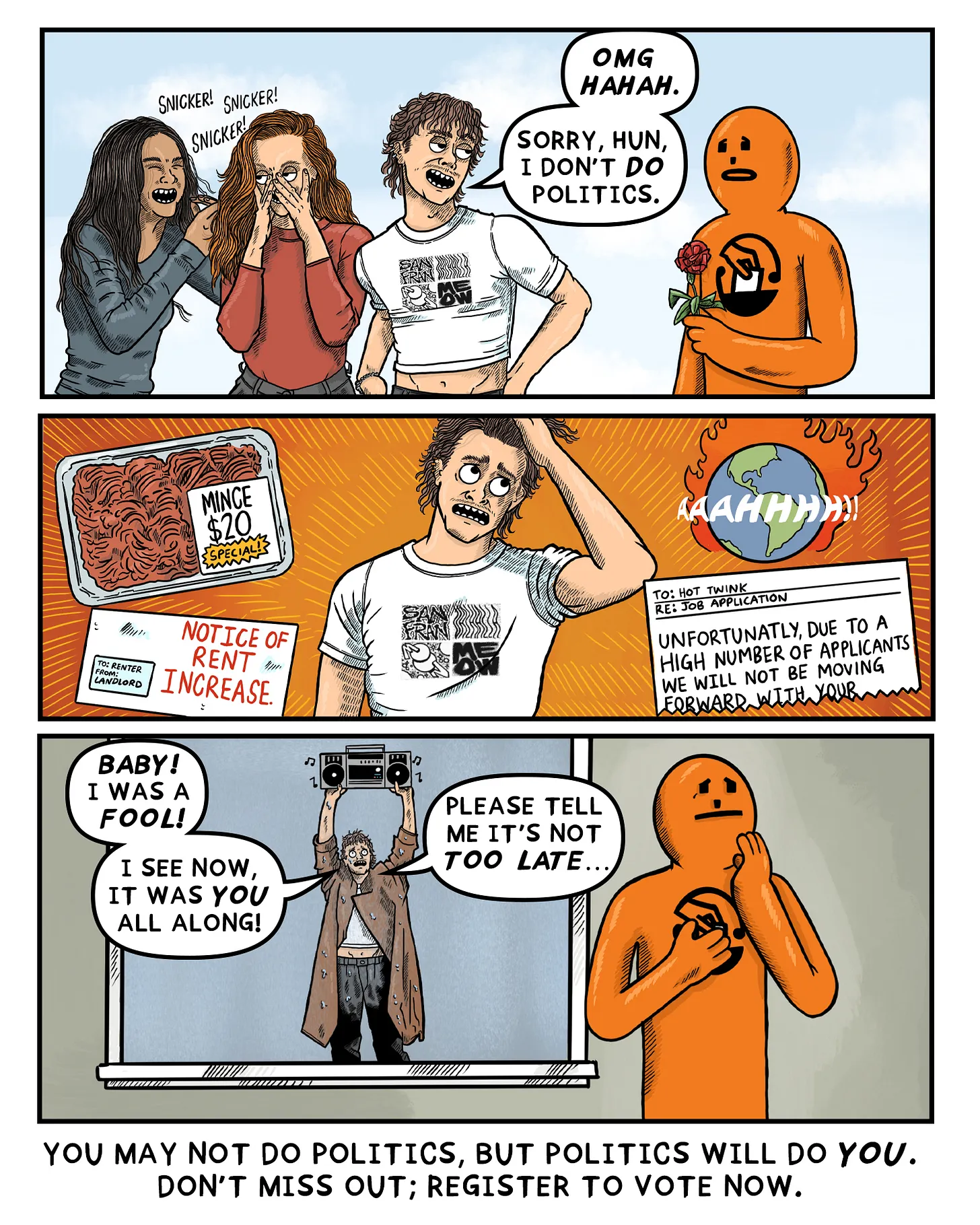
Daniel Vernon, 6 October 2026
Putting this one up for The Alliance Party as I feel they are not getting enough media coverage
So for those interested in what they are offering voters, here's an interview with Alliance leader Victor Billot.
He talks about the party's plans to revive public ownership, Full employment. A bigger role for the state in the economy and more.
Cheers Chairman.
We even had a candidate here in the Rangatikei electorate but he had to pull out due to ill health. Bruce Beetham was the last MP round here that was along these lines.
There's a lot to like, akin to Aotearoa before the ravages of the neo liberal experiment.
Neoliberalism is coming to an end.
Big corporations profiting as more people struggle is maxing out.
The rich getting richer is starting to meet resistance throughout the world.
The end results of which is yet to be seen
Hopefully, voters will one day turn to the Alliance for solutions and not the far right
Kiwiworks. A 21st century Ministry of Works. Training youth and upskilling other workers.
Providing social stability through full employment and getting infrastructure built.
A reminder that the Alliance were a major player in politics that pulled Labour and National back from their rightwards drift.
Alliance are responsible for Kiwibank and Paid Parental Leave.
Indeed.
When I look in the rear view mirror I see a time when it only took the income of 1 fulltime worker to support the family
We should be aiming to restore that going forward.
Still the last cab off the rank I see
Greens ruled out of law-and-order portfolios
https://www.interest.co.nz/public-policy/140701/were-verge-being-able-form-coalition-just-greens-and-opportunity-labour-eyes
That was last week. McAnulty's judgement is proved correct, as this is from today:
Oriini Kaipara discusses visit to Mongrel Mob gang pad | RNZ
Note: to those who say it's a media beat-up, it is nobody else's decision to give an interview or choose what to say in the interview. Or what to post on social media. Last week's photo op would now be old news, fading from the headlines, if Oriini Kaipara and TPM wasn't keeping it there.
Luxon, Seymour and Peters have been given a free gift and they are gratefully accepting it.
This is unlikely to hurt TPM support.
Many of their supporters will see the likes of ACT and NZF along with the mainstream turn on them and it will most likely strengthen their unity
Great, so they will retain their electorate seats while the government that tramples on their voters gets re-elected.
Big win.
Well with Labour stating they are trying to form a parliament after the election that doesn't have TPM in it. That is all they are likely to win either way.
BHN had a very interesting spin: if OP-Lab-Greens need TPM to govern that gives the party leverage post-election. Labour making 'no TPM' noise pre-election is to steal votes ie Want a Māori bloc in government, vote only Labour. After the election, things will look very different.
Yes, just trying to secure as many votes for Labour as possible.
However, McAnulty seems to have said the quiet bit out loud. Labour was trying to win all the Māori seats because they are trying to form a parliament after the election that doesn't have TPM in it.
Things will only look different after the election if it turns out they really need them
An interviewer walks into a pub. Winston Peters walks out of the pub.
https://newsroom.co.nz/2026/10/19/you-sound-like-a-lousy-apologist-for-the-labour-party/
I met David Seymour in the street today. When he offered to engage in a conversation, I told him I was a life member of the Labour Party but I would still shake his hand. He commented that I would be in favour of young people taking "P" then. I said that I was an old man who was very much in favour of taking "P" and that as I got older I needed to take pees even more.
He then tried to engage by saying that ACT roots were in the 1935 Labour government of Savage and Fraser. I disagreed, of course. I then put to him the serious point that we needed in NZ to have a discussion as to what the social contract meant, that we could all agree. The concept of a social contract had been mentioned in a public meeting with the local candidates one of whom stood alongside Seymour as we spoke. He agreed it was raised.
This very specious argument of Seymour that ACT roots were in 1935 Labour principles needs to be examined.
The socialism that Savage described as 'applied Christianity' was these basic 1935-49 Labour tenets and actions to achieve them. Where could Seymour claim that these were what informed ACT's policies and actions in 2026?
The basic welfare principles of the first Labour Government (1935–1949) under Prime Ministers Savage and Fraser were that every citizen has a right to a reasonable standard of living and that the community is collectively responsible for protecting individuals from economic hardships.
The Social Security Act 1938 integrated public health and financial aid into a single system funded by a mix of specialised taxation and general revenue. As a safety net, it overhauled pensions and means-tested benefits protected the unemployed, the sick, invalids, and widows.
The state guaranteed universal medical advice, free medicines, and free public hospital services to all New Zealanders, regardless of their financial means.
The Family Wage ensured that a married man earned enough to support a wife and two children independently.
The government mandated a 40-hour, five-day work week, set minimum wages for sectors like agricultural labour, and reversed wage cuts.
The state built and provided high-quality, low-cost rental homes specifically for working-class families with children, treating housing as a public utility rather than a purely commercial market.
A universal family benefit paid directly to mothers for each child, completely independent of household income, was complemented by the introduction of social welfare programs in schools, such as providing free milk to all school children.
These were all mandated by a widely agreed social contract- that government should provide a reasonable standard of living, adequate health services, housing and other necessities and guaranteed by all citizens as a collective responsibility- an agreement where citizens obey laws and pay taxes in exchange for state-provided stability, infrastructure, public services, and institutional representation.
This is what is at stake in election 2026.
Did you shower?
Seymour's talents for corrupting public discourse are unmatched.
Those are honourable intentions and it's criminal we have strayed so far from them.
If it helps, Seymour and his fellow travelers might be placing a lot of importance in the 'all' or 'universal' in your description. He/they are virulently opposed to anything that acknowledges race or creed especially Maori
Outstandingly clever P/pee comment – if anyone deserves to be put on the back foot, it's Seymour.